Steam Cleaning vs Hot Water Extraction: Same Thing?
Carpet Cleaning Apex • September 26, 2026 • 9 min read
You search for carpet steam cleaning in Fuquay-Varina or Apex, and half the quotes say “steam cleaning” while the other half say “hot water extraction.” Your carpet warranty says something else again. So is steam cleaning the same as hot water extraction? For carpet, yes. “Steam cleaning” is the everyday name for hot water extraction, and the two terms describe one method. The catch is that a true vapor steamer, the handheld kind sold for tile and countertops, is a completely different tool, and it is not what a carpet maker means.
That confusion matters for three reasons: it changes what you are actually buying, it decides whether your carpet warranty is satisfied, and it explains why some “steam” jobs leave a floor wet for a day. This guide defines both terms, shows what happens at each step of an extraction clean, compares it with true steam and with the rental machines sold as “steam cleaners,” and gives you the questions to ask before you book.
Is steam cleaning the same as hot water extraction?
Yes. In carpet cleaning, steam cleaning and hot water extraction are two names for the same process: heated water and a cleaning solution are pushed into the pile, then pulled back out by a strong vacuum along with the loosened soil. No boiling vapor is involved in the cleaning itself.
The carpet makers say so in their own care documents. Shaw’s Carpet Care and Maintenance guide states that “Shaw recommends only hot water extraction (also called ‘steam cleaning’)” (Shaw Floors care guide, PDF), and Shaw’s care page tells owners to schedule “a professional hot water extraction (steam cleaning)” (Shaw Floors, carpet care). When a manufacturer puts the two terms side by side like that, they are telling you there is no difference to find.
So if one Apex quote says “steam” and another says “extraction,” compare them on what they include, not on the name. The name tells you nothing about the pre-treatment, the rinse, or how much water gets left behind.
What Actually Happens in Hot Water Extraction
Hot water extraction is a rinse-and-recover method: it puts a controlled amount of hot solution into the carpet and immediately vacuums it back out. Mannington Commercial describes it plainly: it “forcefully injects cleaning solution and hot water into the carpet,” and the solution “is then extracted along with embedded soil through a powerful vacuum” (Mannington Commercial, How to Clean and Maintain Commercial Carpets).
A complete extraction clean usually runs in this order:
- Dry soil removal. A thorough vacuum first. Dry grit and red clay dust come out far more easily dry than as mud.
- Pre-spray. A cleaning solution goes on the traffic lanes and spots and sits for a few minutes to loosen oily soil.
- Agitation. A grooming brush or rotary tool works the pre-spray into the pile.
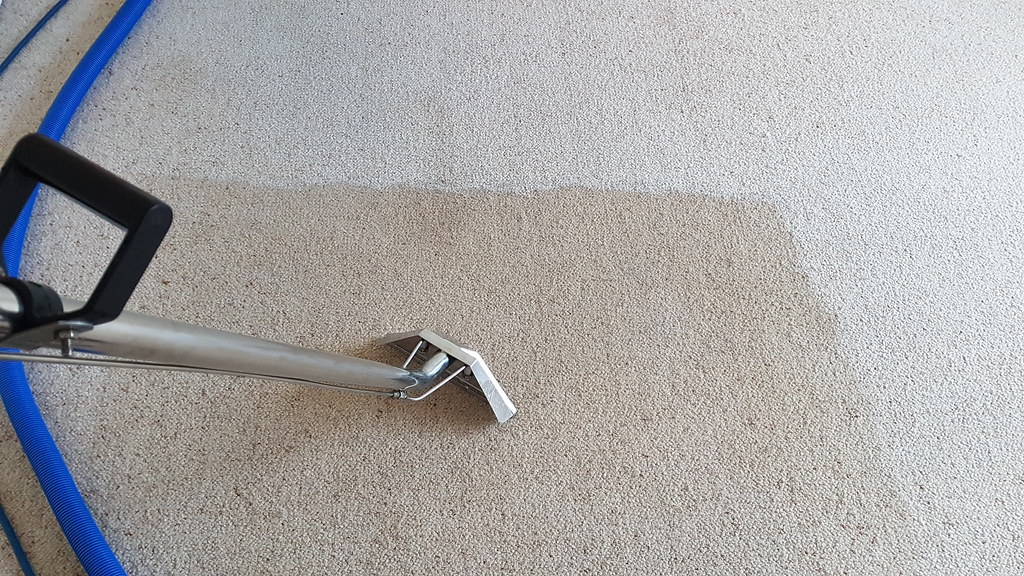
- Rinse and extract. The wand injects hot water and pulls it back out in the same pass. This is the part people picture when they say “steam cleaning.”
- Drying. Airflow finishes the job. Our guide on how long carpet takes to dry covers realistic times and how to shorten them.
Step 4 is where the result is won or lost. The injection loosens soil, but only the vacuum removes it. Weak recovery leaves both water and detergent in the pile, which is why the quality of the extraction matters more than the label on the van.
Why Does the Industry Call It “Steam”?
The name stuck because hot water leaving a cleaning wand gives off visible vapor, and “steam cleaning” is easier to say and easier to search than “hot water extraction.” It is shorthand, not a technical description. The water is hot, but the cleaning is done by liquid water and the vacuum that recovers it.
That shorthand has a cost. People searching “steam cleaning” sometimes buy a true vapor steamer expecting it to deep clean a carpet, and people reading a warranty that says “hot water extraction” sometimes wonder whether a “steam clean” counts. It does, as long as the job is a real extraction clean with vacuum recovery.
Pro tip: Read the quote, not the headline. A line that says “steam cleaning” should still list pre-treatment, a rinse, and the extraction pass. If the only thing described is “steam,” ask what machine recovers the water and how.
True Steam, Rental “Steamers” and Extraction Compared
Three different machines get called “steam cleaners,” and only one of them is the method carpet makers specify. The table sets them side by side, with low-moisture cleaning added for reference.
| Method | What it does | Water recovered? | Where it fits |
|---|---|---|---|
| Professional hot water extraction (“steam cleaning”) | Injects hot solution, vacuums it back out with the loosened soil | Yes, most of it | Deep cleaning residential carpet; the method Shaw and Mohawk name |
| Rental or home “steam cleaner” | A small extractor using hot tap water and consumer detergent | Partly; weaker suction | Small refreshes and fresh spills |
| True vapor steamer (handheld or canister) | Blows a small amount of vapor at a surface | No recovery at all | Hard surfaces, some tile and grout work; not a carpet deep clean |
| Low-moisture cleaning (encapsulation, bonnet) | Very little water; soil is bound up and vacuumed later | Not extracted | Commercial maintenance between deep cleans |
The rental machine in the second row is the one most people mean by “steam cleaner” at the grocery store. It is a genuine extractor, just a much weaker one. Our comparison of a professional versus rental carpet cleaner covers where that gap shows up. The last row is a separate family of methods altogether, covered in dry carpet cleaning vs steam cleaning.
True vapor steam deserves one specific warning. The Carpet and Rug Institute tells homeowners: “Don’t use a steam cleaner when dealing with urine spots because the heat will set the stain and the smell” (CRI, cleaning and maintenance). In a town with as many dogs as Apex, that is a mistake worth avoiding before it happens.
Which Method Does Your Carpet Warranty Mean?
Your warranty means hot water extraction, the same process sold as “steam cleaning.” Mohawk’s care guide states that “Mohawk requires professional hot water extraction every 18 months using cleaning products, equipment or systems that carry the CRI Seal of Approval” (Mohawk Care and Maintenance Guide, PDF). Shaw’s guide recommends only hot water extraction and warns that non-approved products “may result in damage to your carpet that will not be covered by your warranty.”
The CRI Seal of Approval is the Carpet and Rug Institute’s testing program for cleaning products and equipment; it measures whether they remove soil without harming the carpet. You can ask any cleaner whether the equipment and products they use carry it.
This matters most in the newer subdivisions around Apex, from Smith Farm to Sweetwater, where the carpet is often still inside its original warranty. Keep a dated invoice from every professional clean that names the method. How often you need one depends on your household, which is the subject of our guide to how often carpet should be professionally cleaned.
Questions to Ask Before You Book a “Steam Clean”
The right questions turn a vague “steam cleaning” quote into something you can compare. Ask these, whatever name the company uses:
- Is this hot water extraction with vacuum recovery? The answer should be a plain yes.
- What happens before the rinse? Pre-spray and agitation on the traffic lanes should be part of the job, not an extra you discover at the door.
- How is detergent residue rinsed out? Residue left in the pile attracts soil. The re-soiling problem is explained in our post on why carpet gets dirty fast after cleaning.
- How long will the carpet take to dry? With good extraction and airflow, most carpet dries in hours, not days. Humid Triangle summers stretch that, so ask about airflow in July.
- Will you treat pet spots differently? Urine sits in the pad, below where an ordinary rinse reaches. Pet stain and odor removal is a separate treatment for a reason.
For a whole-house deep clean, professional carpet cleaning by hot water extraction is the method the carpet makers name. Room-by-room pricing is in the Apex carpet cleaning cost guide.
Frequently Asked Questions
Does carpet steam cleaning actually use steam?
No. Carpet “steam cleaning” uses hot liquid water and a cleaning solution, then vacuums them back out. The vapor you see coming off the wand is a side effect of the hot water, not the thing doing the cleaning. Shaw’s own guide uses “steam cleaning” as another name for hot water extraction.
Is a handheld steamer good for carpet?
Not for deep cleaning. A handheld vapor steamer puts down a little moisture and recovers none of it, so loosened soil stays in the pile. The Carpet and Rug Institute also warns against using one on urine spots, because heat sets the stain and the smell.
Is hot water extraction safe for upholstery?
Often, but it depends on the fabric’s cleaning code. Many synthetic sofas in Apex family rooms tolerate extraction well, while fabrics marked S call for solvent or low-moisture methods. Upholstery cleaning starts with the tag and a hidden-spot test before any water goes on.
Which is better for pet odor, steam or extraction?
Neither on its own. Heat from true steam can set urine, and a standard extraction rinse reaches the carpet face rather than the pad where urine collects. Pet odor needs a treatment aimed at the pad, then extraction to rinse it out.
How long does steam cleaning take to dry in Apex?
Usually 4 to 8 hours after a professional extraction clean with good airflow, and longer on a humid summer day with the air conditioning off. Run the AC and the HVAC fan and it dries much faster.
Will “steam cleaning” satisfy my carpet warranty?
Yes, if it is a professional hot water extraction clean. Mohawk and Shaw both name hot water extraction, and Shaw explicitly equates it with steam cleaning. Keep the dated invoice, and request a free quote that names the method in writing.
Steam Cleaning or Hot Water Extraction: Book the Right One
Steam cleaning and hot water extraction are the same carpet method, so the useful question is not which name a company uses but how well it rinses and recovers. For homes in Apex, Cary, Holly Springs, Fuquay-Varina and Morrisville, that means pre-treatment on red clay traffic lanes, a thorough rinse, strong extraction and a realistic drying plan for humid weather.
When you are ready, request a free quote and ask each of the questions above. For a price before you call, the carpet cleaning cost guide lists up-front, room-by-room pricing.