Carpet Cleaning on a Septic System
Carpet Cleaning Apex • September 27, 2026 • 7 min read
If your home runs on a well and a septic tank instead of city water and sewer, booking a cleaning raises a question most homeowners on municipal service never have to ask: where does all that water go? Carpet cleaning on a septic system is not risky by default, but it is not identical to cleaning a carpet in a house tied to a city sewer main either. Two things change: how much water reaches your system in a short window, and what is in that water. Neither one is a reason to skip a deep clean, since red clay and everyday soil track into an entryway on a well-and-septic lot the same way they do anywhere else. It is a reason to ask a few specific questions first. This guide walks through what North Carolina’s own septic and well guidance actually says, and the exact questions worth asking before you book carpet cleaning in Willow Spring or anywhere else on a septic system.
Does Carpet Cleaning Actually Add Risk to a Septic System?
Not inherently, but the amount of extra water matters. A septic system is sized around a household’s normal daily water use, and North Carolina State Extension’s guidance on septic maintenance puts a number on it: “many soils can absorb the 200 to 250 gallons of sewage usually produced each day by a family of four, but these soils would become waterlogged if an extra 250 gallons were added.” The system is not fragile, but it is sized, and a large one-time load on top of a normal day is the specific thing the guidance warns against.
A carpet cleaning with equipment that drains into the house can be that kind of event: a concentrated burst of water over a few hours rather than water spread across the day. That does not make it dangerous, but it is the kind of load the EPA’s SepticSmart program has in mind when it tells homeowners to space out water-intensive tasks, laundry loads and dishwasher cycles included, rather than stacking them on top of each other. Practically, that means it is worth avoiding a big laundry day or running the dishwasher back to back on the same afternoon as a whole-house carpet cleaning, and it is worth asking your cleaner roughly how much water a job that size involves.
Truck-Mounted vs. Portable Equipment: Where the Wastewater Goes
This is the single most useful thing to ask about, because it depends entirely on the equipment, not the company’s intentions. Professional carpet cleaning equipment splits into two broad categories, and they handle recovered water differently.
| Equipment type | Where the wastewater goes | What to ask |
|---|---|---|
| Truck-mounted extraction | Carried in a tank on the vehicle and hauled away from the property | ”Does the wastewater ever touch my plumbing?” |
| Portable / walk-in extraction unit | Can be filled and emptied through a house sink, tub, or toilet | ”How many gallons, and over what time window?” |
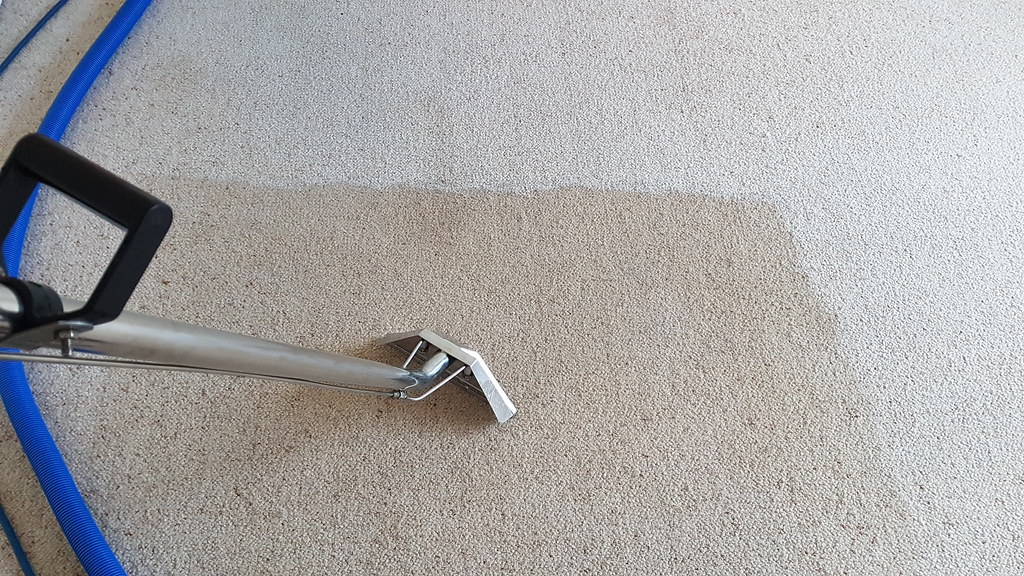
With a truck-mounted unit used for professional hot water extraction, the recovered water stays in a tank on the truck, so it does not go into your septic system. Portable units exist for good reasons (they reach upper floors and tight spaces a hose cannot), but if a portable unit empties into your home’s plumbing, that water is going into the same system your septic tank has to process. Neither answer should be treated as automatically wrong, it is simply a fact worth knowing before the job starts, and it applies the same way to upholstery cleaning or tile and grout cleaning booked in the same visit.
What Chemicals Should Not Go Down a Septic-Connected Drain?
Disinfectants, solvents, and other harsh household chemicals top the list, because they can kill the bacteria a septic tank needs to break sewage down. NC State Extension is direct about it: “pesticides, paints, paint thinners, solvents, disinfectants, poisons, and other household chemicals should not be dumped down the drain into a septic system because they may kill beneficial bacteria in the septic tank and soil microorganisms that help purify the sewage.” NC’s own homeowner guidance echoes it with a shorter list: don’t pour “grease, oils, fats, paint, gas, cleaners, meds, coffee grounds or food scraps down your sink.”
Carpet cleaning pre-treatment and rinse products are formulated to be applied to fiber and largely pulled back out by the extraction pass, not poured down a drain in bulk, which is a different situation from dumping a bottle of solvent into a sink. Even so, it is a fair question for any septic-system homeowner to ask: what is in the pre-treatment, and does any of it get rinsed down a house drain rather than extracted back out with the wastewater?
Pro tip: If you are planning a whole-house cleaning with a portable unit that drains into the house, keep other big water uses, like several laundry loads or back-to-back dishwasher cycles, off that day. NC DHHS puts it plainly: “Don’t flood your system with too much water at once.”
Wells Add a Second Question: What’s Coming In, Not Just Going Out
A septic tank handles what leaves your house; a well is what comes in. A carpet cleaning does not put anything into a well. The machine may draw its fresh water from the house supply, which on a well property is the well, so it is fair to ask where the fresh water comes from as well as where the recovered water goes. For the well itself, Wake County’s guidance is that testing by a certified laboratory is the only reliable way to be sure you have safe drinking water. That is routine well care, not a carpet question, but it is the other half of the “well and septic” conversation.
On the septic side, NC DHHS’s homeowner guidance says “most tanks should be pumped every three to five years,” separate from anything a carpet cleaning does. If you cannot remember your last pump-out, that is worth scheduling regardless of when you book a cleaning.
Frequently Asked Questions
How much water does a professional carpet cleaning actually use?
It varies by job size and equipment, and no single published, general-purpose figure was found for this guide, so none is given here. What matters more than the exact gallon count is which category of equipment is being used: truck-mounted extraction keeps recovered water off your plumbing and septic system entirely, while a portable unit that drains through your sink or tub adds to your household’s water use for the day. Ask your cleaner directly if you want a number specific to your home and room count.
Will a portable rental machine hurt my septic system?
A rental machine is emptied into the house plumbing, so its water goes to the septic system the way a truck-mounted unit’s does not. NC State Extension’s point about large, one-time water additions is the relevant principle: keep laundry, dishwasher cycles and other big water use off the afternoon you run it.
Do I need to tell a carpet cleaner I’m on a well and septic system?
It is worth mentioning, mainly so you can ask the two questions this guide covers: what equipment is being used and where the wastewater goes, and what is in the pre-treatment chemistry. Neither question should be unusual for a cleaner to answer.
Can I get carpets cleaned right after my septic tank is pumped?
None of the guidance cited here sets a waiting period between a pump-out and a carpet cleaning. If you have concerns about your particular system, ask the company that pumped your tank, since it has seen the system’s actual condition.
How often should I have my septic tank pumped if I clean carpets regularly?
Carpet cleaning is not part of the pumping-frequency guidance at all; NC DHHS says most tanks should be pumped every three to five years, the same schedule for any septic system. See our pricing guide for what a cleaning itself costs once you are ready to book.
Carpet Cleaning for Willow Spring’s Well and Septic Homes
None of this is a reason to put off a deep clean. Red clay, pollen, and everyday soil do not care whether a home is on a well and septic system or a city main, and neither does builder-grade carpet a few years into its life. What changes on a well-and-septic property is which questions are worth asking first: what equipment is coming, where the recovered water goes, and what is in the pre-treatment. Willow Spring, Apex, Fuquay-Varina and Holly Springs are all in the area this site covers, with the same up-front, written pricing either way. Request a free quote and ask about equipment and wastewater; the answer belongs on the written quote before any work starts.
This is general information based on published septic and well guidance, not an inspection of your specific system. For a system-specific question, contact a licensed septic or well professional or your county’s onsite wastewater program.
Sources: NC State Extension: Septic Systems and Their Maintenance · NC DHHS: NC Homeowners, Caring for Your Septic System · EPA SepticSmart Education Materials · Wake County Government: Septic System Permitting · Wake County Government: Water Quality, Wells & Septic Systems