Pollen in Carpet Allergy Relief | Professional Cleaning in Apex 2026
Carpet Cleaning Apex • August 29, 2026 • 8 min read
Your Vacuumed Carpet Isn’t Clean: Why Pollen Still Makes You Sick
You vacuum every week. Your Dyson runs for 15 minutes twice over the living room. But come April in Apex, your eyes still itch when you walk barefoot across the floor. Your child wakes up sneezing. The vacuum bag shows nothing. So where’s the pollen?
It’s deeper than your vacuum can reach.
Standard household vacuums, even expensive ones, pull surface dust and debris. But seasonal pollen is different. These microscopic particles are sticky. They settle past the top fibers of your carpet pile, embedding in the lower layers where they stay trapped, recycled into the air every time someone walks across the room. You’re literally grinding pollen deeper with each step.
That’s not a vacuum problem. That’s a carpet problem. And it’s exactly what professional deep cleaning solves.
The Apex Pollen Season: When It Happens and Why It Matters
The Triangle’s pollen season runs differently than the rest of North Carolina. Apex sits in the transition zone where coastal and piedmont plants overlap, which means you get hit twice: tree pollen peaks from late March through May, then grass pollen takes over June through July.
April and May are the worst months. Oak, pine, and birch pollen counts in Wake County routinely exceed 1,000 grains per cubic meter during peak bloom. That’s the threshold where allergy symptoms noticeably worsen for most people.
Here’s what that means for your carpet: while pollen is in the air, it’s settling onto every surface, including the woven fibers of your carpet. Over four to six weeks of peak season, an Apex home can accumulate a surprising load of trapped pollen in carpet and upholstered furniture combined; it shows up as visible yellow residue in the recovery tanks during a professional deep clean.
Why Your Vacuum Stops Working Against Pollen
The standard upright or canister vacuum works by suction. It pulls air through the carpet pile, collecting loose surface debris. The problem: pollen doesn’t sit on the surface for long. It falls through the pile within hours of being airborne.
Once pollen settles into the lower carpet layers, standard suction alone can’t extract it efficiently. The fibers grip the particles. Repeated vacuuming actually pushes them deeper, which is why allergies sometimes get worse right after you’ve vacuumed (you’ve just kicked up what was settled, and you’ve redistributed the rest lower).
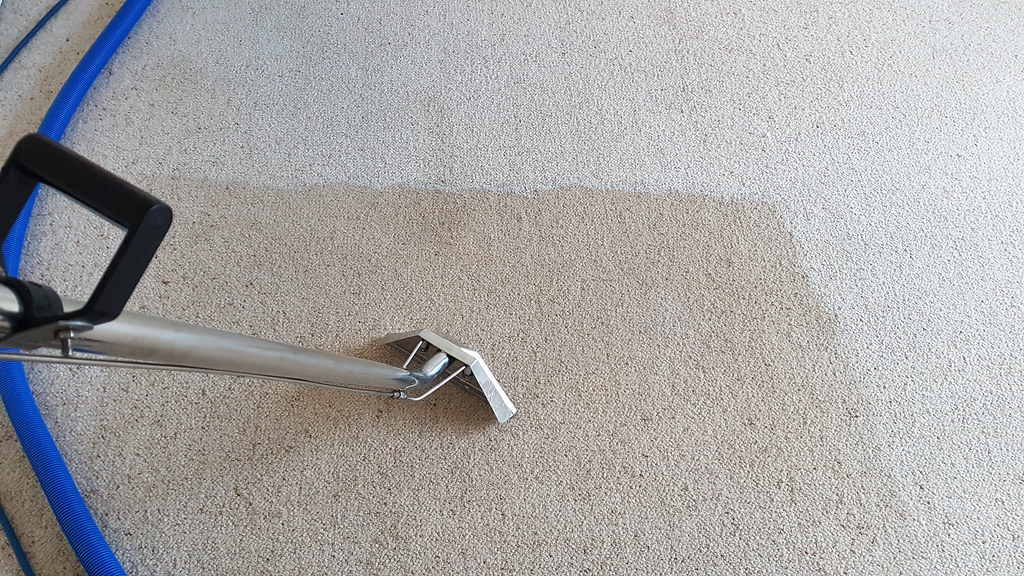
Professional equipment works differently. Hot water extraction, often called steam cleaning, uses pressurized water jets to penetrate the entire pile depth, then immediately extracts the water along with whatever it’s suspended. The process doesn’t just loosen pollen; it liquefies and removes it. The two names describe one method; steam cleaning vs hot water extraction explains the difference in terms.
HEPA filtration is the second part of the equation. While standard household vacuums exhaust fine particles back into the air (which defeats the whole purpose for allergy relief), HEPA-filtered professional systems trap 99.97% of particles 0.3 microns and larger before exhaust. Pollen grains are 10-100 microns, so HEPA catches them completely.
The combination is why DIY steam rentals and standard vacuums can’t match professional results: professional-grade equipment has the water temperature (180-210 degrees Fahrenheit), extraction power, and multi-stage HEPA filtration that household equipment simply doesn’t. This is the same hot water extraction process we use on every Apex carpet job.
What Happens After Professional Cleaning: The Air Quality Window
After we complete a professional deep clean in your Apex home, two things change immediately: trapped pollen is gone, and your air quality improves for 3-4 weeks.
During those first few weeks, allergen levels in your home drop significantly. Dust mite counts decrease because mites feed on the dead skin and organic material that pollen carries; removing the pollen reduces their food source. Air feels fresher because there’s simply less particulate being kicked up with every footstep.
But here’s the realistic timeline: in the middle of Apex’s April-May pollen season, that 3-4 week window fills up again as new pollen settles. This is why we recommend cleaning either just before peak season (late March) or right in the middle of it (mid-April), depending on your personal allergy severity.
If you’re doing this for allergy relief during high-pollen months, timing matters more than with standard cleaning. Clean too late, and you’ve suffered through 8 weeks of peak symptoms before the relief kicks in. Clean too early, and the benefit fades before you need it most.
Three Local Prevention Strategies That Work
You can’t eliminate pollen from the air, and professional cleaning alone isn’t a permanent fix. But combining cleaning with prevention extends the relief window and reduces how fast it fills back up.
First: Doormat barriers and entry protocols. Apex homes with a covered entryway and a rigid doormat see 40-60% less tracked pollen than homes where people walk straight in. Keep a dedicated pair of shoes by the door during high-pollen months. This sounds simple, but it cuts the amount that needs cleaning by a meaningful margin.
Second: HVAC filter upgrades. Your standard 1-inch HVAC filter was never designed to capture pollen; it’s designed to protect your HVAC unit. Switch to a 5-inch pleated or MERV-13 filter during March through June. It captures more pollen and reduces the amount that circulates back to your carpet. Change it every 60 days during pollen season instead of annually.
Third: Humidity management. Pollen becomes heavier and settles faster at 40-50% humidity. Apex’s spring is typically humid (55-65%), which keeps pollen airborne longer. Running a dehumidifier in high-traffic rooms during peak season helps pollen settle to surfaces (rather than your lungs), where you can then clean it up.
FAQ: Pollen Cleaning and Allergy Relief
Q: Will one professional cleaning cure my spring allergies? No. Professional cleaning removes what’s trapped in carpet and improves air quality for 3-4 weeks, but new pollen will settle once peak season starts. For real relief during April-May, expect to clean once before the season and potentially once during mid-season if symptoms remain severe.
Q: Can I just rent a steam cleaner and do it myself? Technically, yes. But rental equipment underperforms professional equipment in three ways: lower water temperature (leading to incomplete pollen extraction), no HEPA filtration (pollen gets exhausted back into the air), and inconsistent technique (rentals are hard to use evenly, leaving damp carpet that can mildew). Most people see minimal symptom improvement from rental cleanings, which is why allergists recommend professional service.
Q: How long does the carpet stay damp after cleaning? Professional equipment leaves carpet with 1-2% moisture content afterward, which dries completely in 4-8 hours with normal air circulation. Overnight drying is standard. Rental steam cleaners often leave 5-10% moisture, which can support mildew and takes 24-48 hours to dry.
Q: Does professional pollen cleaning work on pet allergies? Yes and no. Pet dander works similarly to pollen (it settles deep in fibers), so professional cleaning removes accumulated dander effectively. But the relief is temporary for the same reason: new dander accumulates if the pet is still in the home. If you have a pet allergy and own a pet, professional cleaning combined with frequent vacuuming (2-3 times weekly) and HVAC filter upgrades is a realistic management strategy, not a cure.
Pollen Carpet Cleaning: Pricing and What’s Included
Professional pollen cleaning in Apex runs $120-$300 per visit, depending on home size and carpet condition.
Typical pricing breakdown:
- Small home, 800-1,200 sq ft: $120-$150
- Medium home, 1,200-2,000 sq ft: $150-$220
- Large home, 2,000-3,500 sq ft: $220-$300
- Deep stain removal or allergen treatment add-on: +$30-$50
The price reflects professional-grade equipment, HEPA filtration, technician expertise, and the 4-8 hour drying time. It’s higher than rental costs but significantly lower than repeated medical bills from poorly managed allergies. For room-by-room numbers, see the Apex carpet cleaning cost guide. Allergy households often pair carpet with upholstery cleaning and mattress cleaning in the same visit, since fabric furniture and beds trap the same pollen load.
For most Apex homes, one cleaning in late March or mid-April is sufficient during pollen season. If you suffer severe allergies and want maximum relief, a second mid-May cleaning can extend the symptom-free window, bringing the season total to $240-$600 depending on home size.
When to Schedule: Before vs. During Peak Season
Clean before the season (late March): You’re starting with a completely clean carpet when pollen begins accumulating. This approach works well if your allergies are moderate and you’re preventatively managing. You get maximum relief for 6-8 weeks as pollen season ramps up.
Clean during peak season (mid-April): If you’ve already been suffering through April allergies, mid-season cleaning provides immediate relief. Symptoms improve within 24-48 hours. The relief window runs through May, though new pollen continues settling.
Both timing strategies work; the choice depends on whether you’re preventing (pre-season) or treating (mid-season). For the rest of the year, how often carpet should be cleaned sets out a schedule by household, including allergy homes.
Your Next Step: Get Pollen Out of Your Carpet
If you’ve been vacuuming every week and still sneezing when you walk across your living room, pollen is deeper in your carpet than any home vacuum can reach. Professional deep cleaning reaches the pollen a home vacuum leaves behind.
Seasonal pollen in Apex peaks April through June. Schedule your cleaning during late March for prevention, or mid-April if symptoms are already affecting your family. Either way, realistic relief is possible, and it starts with a phone call.
Contact Carpet Cleaning Apex today to schedule your spring pollen cleaning. We’ll discuss your allergy timeline, recommend the best cleaning approach for your home, and get you back to comfort before peak pollen season hits.