Carpet Disinfection & Sanitizing in Apex | Post-Illness Deep Clean
Carpet Cleaning Apex • August 29, 2026 • 11 min read
Your Carpet is a Reservoir You Can’t See
It happened at 11 PM on a Tuesday: your teenager walked in from school with a fever, and by Wednesday morning, half the house was sick. Stomach bug, upper respiratory, whatever it was, it’s now living in the places that matter most, in the spaces you can’t disinfect with a bottle of Lysol.
Your carpet is hosting an invisible party.
While you’re running through over-the-counter cold medicines and wiping doorknobs obsessively, your carpets in Apex are quietly collecting bacteria and viruses from coughing, sneezing, and tracked-in contamination. A single sneeze releases up to 200,000 viral particles into a room, and those don’t just vanish. They settle. They cling. They wait for the next person to walk barefoot across your bedroom or for your 2-year-old to crawl across the family room carpet.
The question isn’t whether your carpet needs disinfection after illness in your home, it’s whether you want to take the risk of not doing it.
How Bacteria and Viruses Actually Live in Carpet
This isn’t about being alarmist. It’s about understanding why carpet disinfection isn’t a luxury, it’s a defense.
Carpet fibers create a perfect shelter for microorganisms: dark, warm, and often humid. A typical bacterium can survive on fabric surfaces for days to weeks depending on the species. Respiratory viruses like influenza and coronaviruses can remain infectious on porous surfaces like carpet for hours to days, particularly if the carpet has any moisture content.
The RSV virus, which hits Apex-area schools every fall and winter, has been shown to survive on fabrics for up to 6 hours in lab conditions. Norovirus, which causes the worst stomach bugs families deal with, can persist for days on soft surfaces. Salmonella from pet accidents or contaminated food spills doesn’t vanish just because you vacuumed.
Vacuuming removes visible debris and loose dust. It does not kill microorganisms. Your standard household vacuum isn’t agitated-bristle equipment that kills; it’s a collection tool. It’s like sweeping dirt off your tile floor and calling that disinfection. The microbes remain, embedded deep in the carpet pile and backing.
This is where carpet antimicrobial treatment enters the picture.
What Professional Disinfection Actually Does (and What It Doesn’t)
Professional carpet disinfection uses hospital-grade antimicrobial solutions to penetrate the carpet pile and backing where bacteria and viruses hide. The most common active ingredients in professional treatments include:
Quaternary Ammonium Compounds (Quats). These positively charged molecules surround and rupture the cell membranes of bacteria and viruses, neutralizing them on contact. They work within seconds and are EPA-registered disinfectants used in medical facilities.
Hydrogen Peroxide Based Cleaners. These oxidizing agents break down the protective barriers of microorganisms. They’re effective, safe for most carpet types, and leave no harsh chemical residue because they decompose into water and oxygen.
Hypochlorous Acid Formulations. Similar to bleach but buffered for fabric safety, these are highly effective against both bacteria and viruses without the color-stripping risk of standard chlorine bleach.
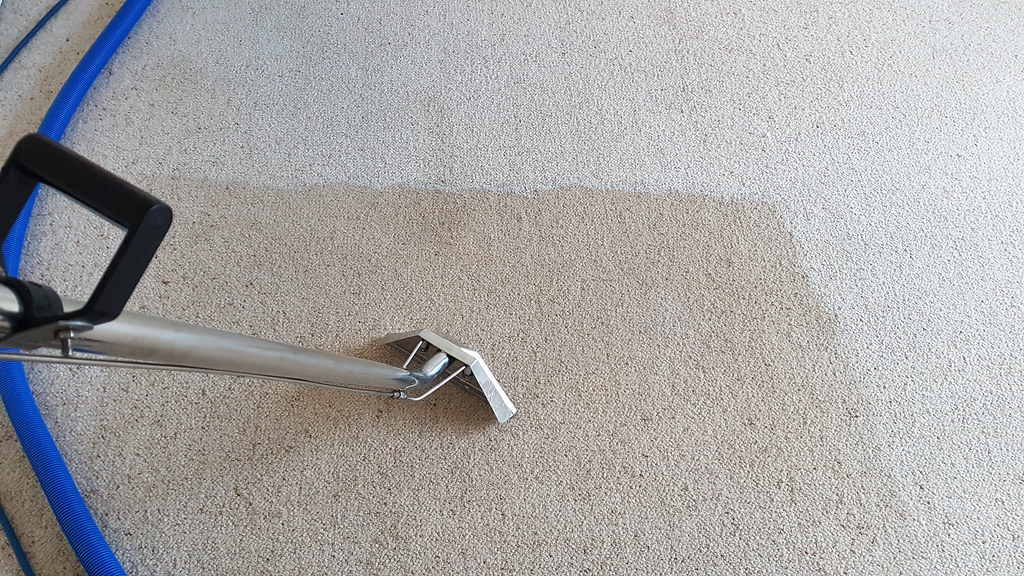
The key word: “contact.” These solutions work where they touch. That’s why professional equipment matters. A spray bottle you apply yourself reaches maybe the top third of your carpet pile. Professional hot-water extraction equipment injects disinfectant deep into the carpet, saturates the fibers and backing, and extracts it after a dwell time, ensuring the antimicrobial agent contacts the microbes living deep where vacuums can’t reach.
What disinfection does NOT do: It doesn’t replace standard cleaning. Disinfection works best on clean carpet. Dirt, dust, and debris can shield bacteria from the disinfectant. That’s why our protocol combines a deep carpet cleaning first, followed by the antimicrobial treatment. It’s a two-step process, and the first step matters.
The Realistic Timeline: When You’ll Feel Safer
Here’s the transparency many companies avoid: You won’t see the results of disinfection. You’ll see your carpet is cleaner, but the actual microbial kill rate happens at a scale you can’t observe.
After professional disinfection, the treatment begins working on contact during extraction. Most bacteria and viruses are eliminated during the 15-30 minute dwell time the solution sits on your carpet. Residual effectiveness continues for 24-72 hours as any remaining microbes come into contact with the antimicrobial layer.
Realistic timeline:
- Immediately after treatment: Your carpet is clean, damp, and should be left untouched for 4-6 hours to allow full drying and continued antimicrobial action.
- After 24 hours: The carpet is dry, safe for foot traffic, and the disinfection is at peak effectiveness.
- After 1 week: The antimicrobial layer continues to suppress bacterial growth, providing residual protection against new contamination.
- After 4 weeks: Foot traffic, humidity, and dust begin to reduce the effectiveness of the treatment, though the carpet is still significantly cleaner than it was before.
This is why regular cleaning is preventive health maintenance, not a one-time fix. A carpet that was disinfected three months ago and has hosted normal household living (shoes, spills, pets, traffic) needs maintenance.
Safe Products Matter, Especially in Apex
If your home includes children under 5 or pets (dogs, cats, rabbits, birds), you need to know exactly what’s being applied to the carpet your family lives on.
Pet-safe and kid-safe disinfectants exist, and legitimate carpet cleaning companies use them by default. The products should be:
- Non-toxic if ingested in small amounts. Children crawl on carpet. Pets lick their paws after walking on carpet. The product shouldn’t be a poison if they encounter a small residue.
- Non-irritating to skin and respiratory systems. Your 3-year-old isn’t going to avoid sitting on freshly treated carpet.
- Septic-safe. If you have a septic system in your Apex home, harsh chemicals that degrade beneficial bacteria in your tank will create expensive problems.
- Hypoallergenic or low-odor formulations. Families with asthma or sensitive airways should know that harsh-chemical smells don’t mean it’s working harder.
Professional carpet cleaning companies should provide a Material Safety Data Sheet (MSDS) for any product they use and explain why they selected it. If they can’t or won’t, that’s a red flag.
When to Invest in Carpet Disinfection
Not every carpet situation requires disinfection. Here’s when it makes sense:
Definitely Disinfect:
- After a household member or visitor has had a contagious illness (COVID, flu, stomach virus, respiratory infection). The 72-hour window after symptoms end is optimal.
- After pet accidents involving vomit, diarrhea, or urine that soaked into the carpet padding. Pet waste can harbor dangerous bacteria like E. coli and Salmonella. For the first-hour cleanup of a single accident, see how to get vomit out of carpet.
- After water damage or flooding, even if you’ve dried the carpet. Mold and bacteria thrive in damp conditions.
- In a home where someone is immunocompromised, very young, or elderly, as a quarterly preventive measure.
- Before moving into a rental or used home, if you have the opportunity.
Consider Disinfection:
- After a large gathering (party, family event) where many people were in your home.
- If you have high-touch-surface concerns but haven’t had a specific illness trigger.
- In commercial settings (home office, Airbnb, rental property) where different people use the space.
Standard Cleaning is Sufficient:
- As routine maintenance (quarterly to annually, depending on household traffic).
- After minor spills or stains, once cleaned.
- As part of regular house maintenance in a healthy household without illness exposure.
Combined Approach: Why Disinfection Alone Isn’t Enough
Here’s the mistake DIY disinfection strategies make: they skip the cleaning step.
A bottle of antimicrobial spray applied to a carpet that still contains dust, pet hair, old food particles, and tracked-in soil is like applying hand sanitizer to hands covered in dirt. The solution can’t work effectively through the barrier of contamination. The microbes are hiding in the residue.
Professional carpet disinfection in Apex follows this sequence:
- Vacuum thoroughly to remove loose debris.
- Pre-treat stains with appropriate cleaners.
- Deep extract with hot water and cleaning solution to remove embedded dirt, dust, and allergens.
- Apply antimicrobial treatment to now-clean fibers.
- Extract again to remove excess moisture and continue antimicrobial contact.
- Allow drying time for complete effectiveness.
This combined approach removes what’s visible (dirt) and what’s invisible (microbes), restoring your carpet to genuinely clean and disinfected.
The Preventive vs. Reactive Question
There’s a mindset shift between thinking of carpet care as reactive (cleaning after the disaster) versus preventive (maintenance to avoid the disaster).
Reactive disinfection costs $100-250 for a whole house, depending on square footage, carpet condition, and product choice. It solves an immediate problem after illness or contamination.
Preventive disinfection, offered quarterly or twice yearly, costs roughly $50-150 per treatment for maintenance levels, less product intensity, but consistent protection for households with health priorities or commercial properties.
The Apex families choosing preventive disinfection are typically: households with young children, senior caregiving situations, homes with immunocompromised members, rental property owners protecting future tenants, and commercial spaces (home offices, Airbnb) with constant guest turnover.
For most households, reactive disinfection after clear contamination (illness, accident) makes sense. For high-risk situations, preventive quarterly treatments are the math that pays off in avoided illness and peace of mind.
What Does Carpet Disinfection Cost in Apex?
Transparency on pricing means explaining the variables:
Whole House Disinfection: $100-$250
The range depends on:
- Square footage: A 1,000 sq ft apartment costs less than a 3,500 sq ft home. Budget roughly $0.10-0.15 per square foot for the treatment component.
- Carpet condition: Heavily soiled carpet requires more pre-cleaning before the disinfectant can work effectively. Budget an extra $25-50 if pre-treatment is needed.
- Product choice: Pet-safe or kid-safe formulations may cost slightly more than standard antimicrobials. Budget $10-25 difference.
- Dwell time: Premium treatments with longer contact time cost more but offer better results. Budget $15-40 difference.
- Combination with other services: Disinfection alone costs less. Disinfection after deep cleaning and stain removal is a package deal with higher value.
Typical breakdown for a 2,000 sq ft home in Apex:
- Standard disinfection after recent illness: $150-180
- Disinfection with prior deep clean: $220-250
- Quarterly preventive disinfection: $100-130 per visit (volume discount)
Every job gets an exact written price before work starts, and discounts apply for recurring service plans. For standard cleaning rates, see the Apex carpet cleaning cost guide.
FAQ: What Homeowners Really Ask
Q: Can I use Lysol spray or bleach on my carpet instead?
A: No. Lysol and bleach are contact disinfectants designed for hard surfaces, not fabric. Bleach will damage or discolor most carpet. Lysol spray leaves a surface residue and doesn’t penetrate carpet fibers where microbes live. DIY antimicrobial sprays applied by hand don’t achieve the saturation and dwell time that professional extraction equipment provides. You’re not achieving disinfection; you’re creating a false sense of security.
Q: How long does the antimicrobial treatment last?
A: Peak effectiveness is 24-72 hours after application. Residual protection continues for 2-4 weeks depending on foot traffic and humidity. After 4 weeks, the treatment is still present but significantly reduced. This is why homes with illness concerns should plan a follow-up treatment after 4 weeks if new contamination risk exists.
Q: Is it safe for my baby/dog immediately after treatment?
A: With professional-grade, kid-safe, and pet-safe products, yes, after the carpet is fully dry (4-6 hours). The drying time allows the antimicrobial agent to set into the fibers. Your baby crawling on damp carpet after treatment isn’t ideal, but once dry, professional disinfectant treatments are designed to be safe for families and pets. Ask your carpet cleaning company to confirm they use products safe for your specific situation.
Q: Do I need to replace my carpet after COVID, or will disinfection do?
A: Disinfection will do. Replacing carpet because of virus exposure is unnecessary and expensive. The virus doesn’t damage the carpet or make it permanently “contaminated.” Professional disinfection eliminates the microbes, restoring the carpet to a safe, healthy state. Replace carpet if it’s worn, stained beyond cleaning, or has underlying water damage, not because of past illness exposure.
Q: What if I have a pet with a urinary tract infection and accidents on the carpet?
A: Disinfection alone won’t solve this. Pet urine soaked into carpet padding creates a bacterial breeding ground (Proteus bacteria, E. coli, Pseudomonas) and a smell that lingers. You need extraction to remove the soaked padding if the urine reached deep layers, combined with targeted enzymatic treatment to break down urine compounds, followed by disinfection. This is a multi-step process. A single disinfection won’t fix it if the padding is contaminated.
Q: Is antimicrobial treatment the same as deodorizing?
A: No. Antimicrobial treatment kills microbes. Deodorizing masks or removes odors caused by bacterial growth, but doesn’t necessarily kill the bacteria. Some antimicrobial treatments include deodorizing agents, but they’re separate functions. A carpet can be disinfected but still smell like old pet accident if the underlying source isn’t addressed. Always combine these strategically.
Q: Can I defer cleaning and just do disinfection?
A: Not recommended. You’re paying for the disinfection to work effectively, and it can’t work its best on a dirty carpet. The dirt layer shields microbes from the antimicrobial. It’s worth combining it with cleaning or accepting that your results will be compromised. Most professional services bundle them because it’s the honest approach.
Schedule Your Disinfection
If someone in your Apex home has been sick in the past week, if you’re worried about invisible contamination after an accident or spill, or if you’re restoring your carpet to healthy status after illness exposure, professional carpet disinfection takes the guesswork out and gets the job done right.
Contact Carpet Cleaning Apex today or view our pet stain and odor removal service to schedule your post-illness deep clean with transparent pricing and safe, effective disinfection products.
Your family’s health isn’t a place to experiment with DIY spray bottles.